



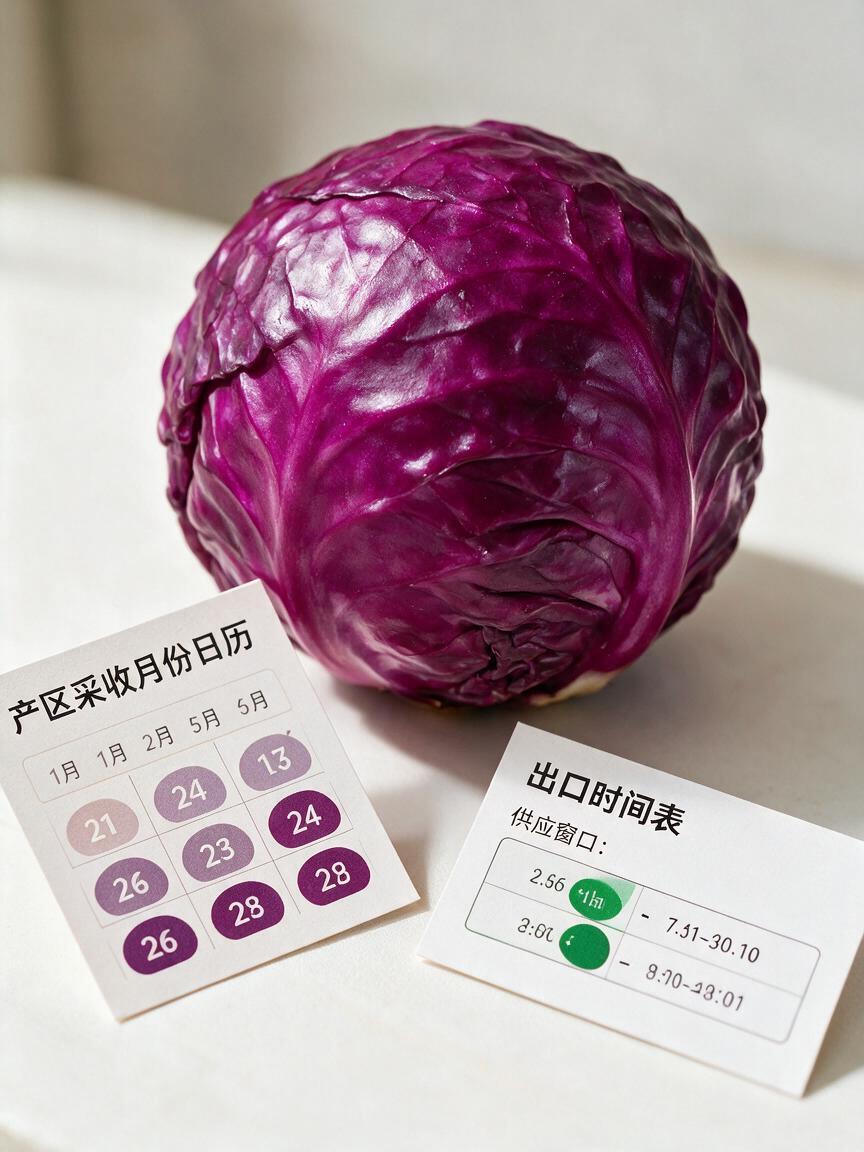
Purple Cabbage Export Seasonality from China: A Supply Calendar
Purple cabbage, with its dense anthocyanin-rich leaves, is a striking addition to salads and coleslaw mixes. Because it is grown across several Chinese regions with staggered seasons, importers can count on fresh purple cabbage during defined supply windows throughout the year.
Rolling regional harvests
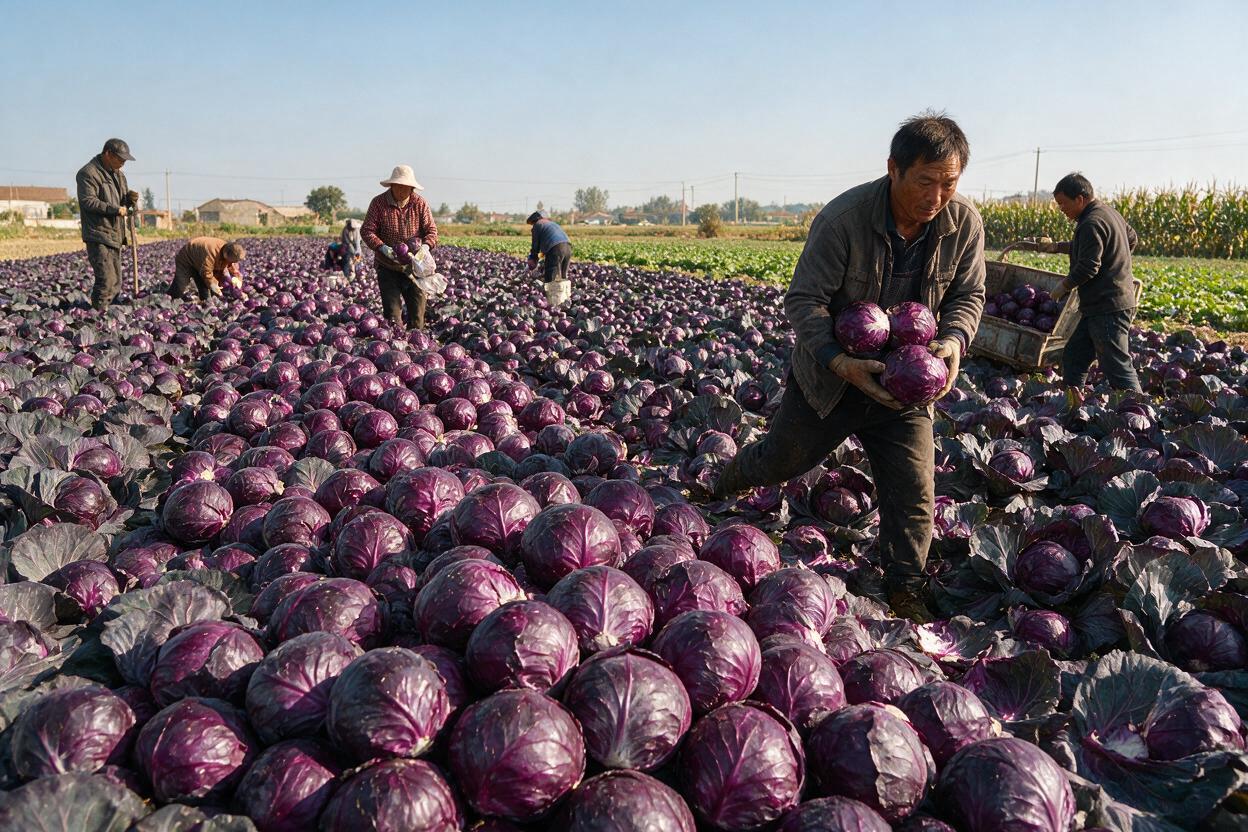
Cooler production areas supply purple cabbage through the main spring and autumn seasons, when firm heads and deep color are easiest to achieve. Warmer regions fill in the shoulder periods, and careful field planning extends availability in between.
Head quality matters for export: buyers look for solid, heavy heads, tightly packed leaves and a rich, even purple-red color without heavy wilting at the cut stem.
Storage that stretches the window
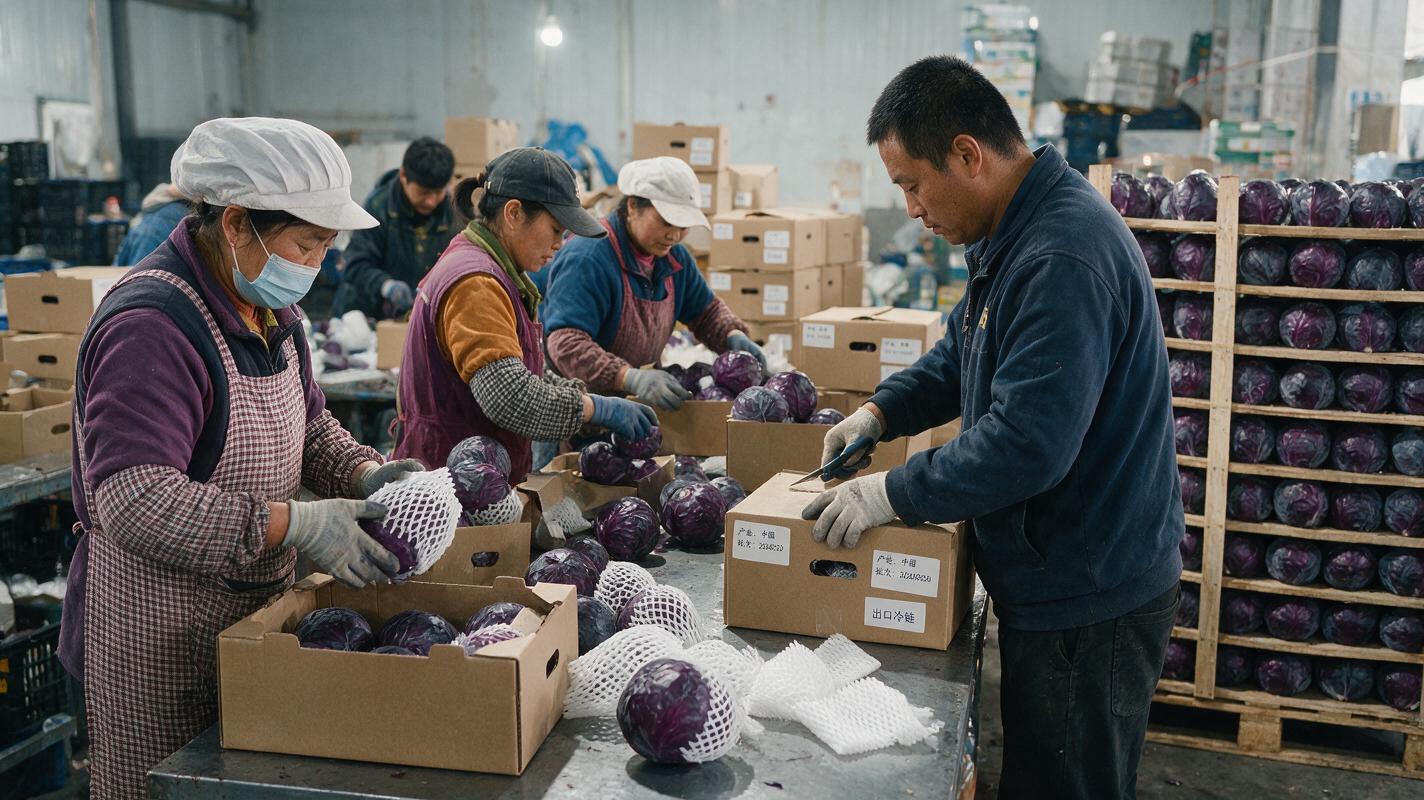
Purple cabbage stores well under cold, high-humidity conditions. Held in refrigerated warehouses shortly after harvest, heads stay crisp and retain color, letting suppliers continue shipments after a field season ends rather than stopping supply abruptly.
This storage buffer smooths price swings and keeps retail and foodservice programs on schedule, which is why most serious exporters combine field supply with cold-holding.
Planning orders against the calendar
By maintaining a supply calendar, exporters can tell buyers precisely when fresh-harvest heads, field-storage stock and cold-held supply are available. This helps importers schedule promotions, mix programs and container loads with confidence.
For buyers who value color, crispness and reliable scheduling, timing purple cabbage orders to the Chinese seasonal calendar is the practical way to secure steady fresh supply and predictable quality.