




Onion Postharvest Curing and Storage for Export
Curing: The First Quality Decision
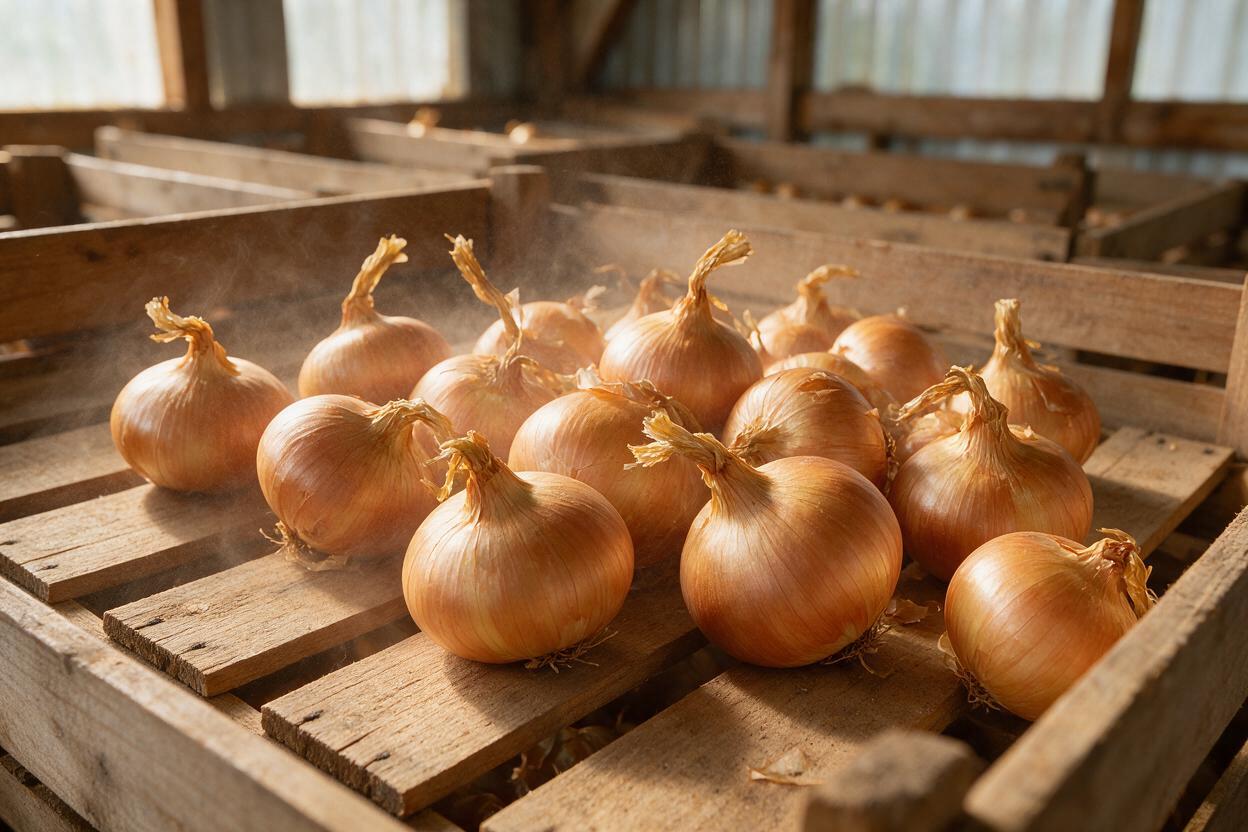
An onion's ability to travel halfway around the world is decided in the days immediately after lifting. Proper curing dries the neck and outer skin, seals the top and develops the protective papery layers that keep moisture in and rot organisms out. Onions that skip this step arrive soft-necked, prone to sprouting and vulnerable to bacterial soft rot during the voyage.
Field and Shed Curing Practices in China
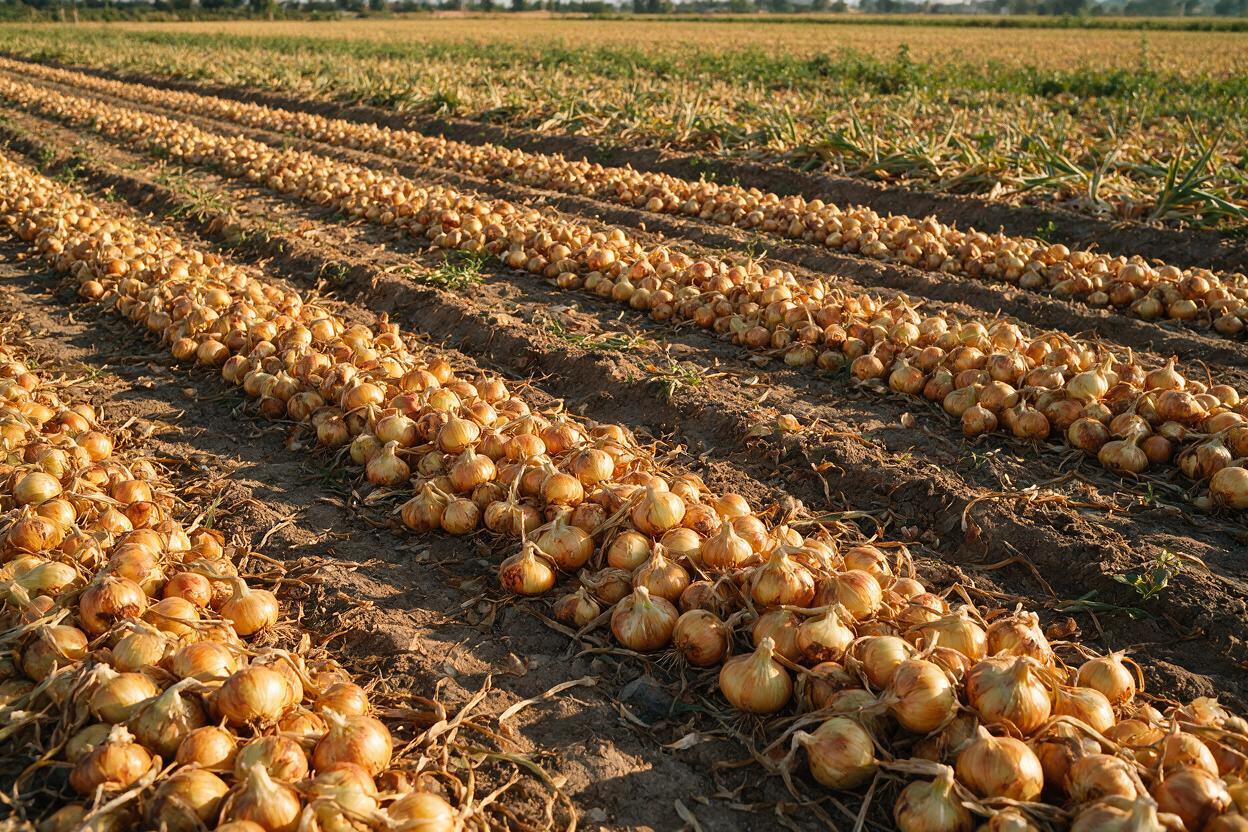
In China's major onion belts, freshly lifted bulbs are often left to cure in the field for several days of dry weather, turning and windrowing to expose all sides to moving air. Where rainfall threatens, growers move bulbs into ventilated sheds with forced air to finish drying the neck. The goal is a fully dry, papery skin and a tight neck with no green or moist tissue that can harbour pathogens in storage.
Storage Conditions That Preserve Export Quality
Once cured, export onions are graded and stored under carefully controlled temperature. Long-term onions are typically held near 0°C with moderate (65-70%) relative humidity to suppress sprouting and rooting while avoiding condensation. Short-voyage orders may be held at higher temperatures to reduce the risk of condensation damage on the skin. Ventilation moves moist air off the bulbs and keeps ethylene and carbon dioxide from accumulating, both of which can trigger sprouting in sensitive varieties.
During storage, exporters monitor sprouting, rooting, decay and skin loss at regular intervals, pulling affected lots before they contaminate healthy stock. This vigilance is what lets a supplier guarantee firm, disease-free bulbs at the packhouse.
Choosing a Cured and Stored Onion Supplier
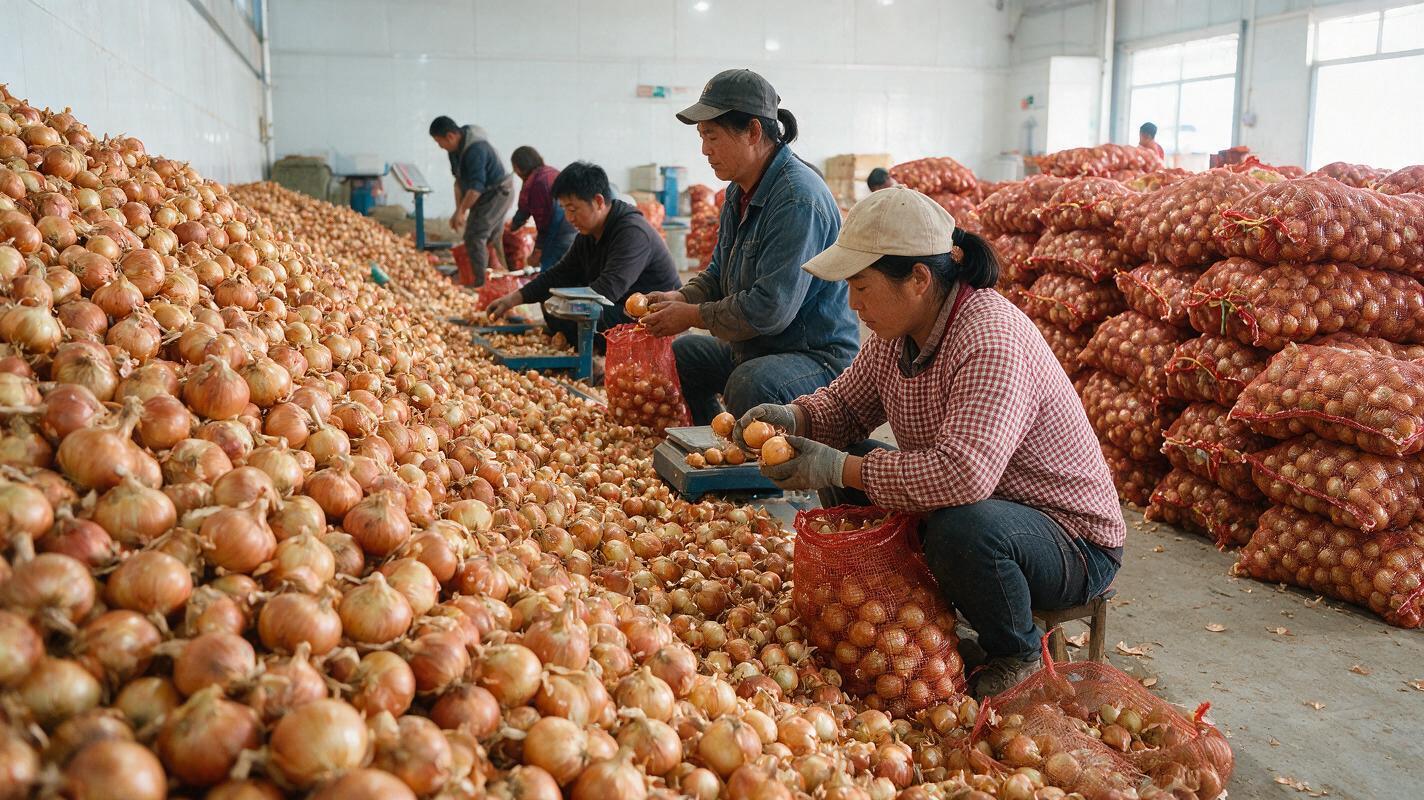
Buyers should confirm the supplier's curing and temperature regime, and ask for recent sprouting and decay data. A supplier who controls the entire chain — from field curing to cold room to container — delivers onions that keep better and arrive in better condition. Request shipment samples and check neck dryness, skin finish and overall firmness before placing volume orders.