




Onion Exports to North American Markets: Sizing Up Import Demand
North America is one of the world's largest and most demanding onion markets. Buyers in the United States, Canada and Mexico expect consistent size, clean firm bulbs and strict compliance with phytosanitary rules. Chinese exporters are supplying an increasing share of this demand with careful variety selection and disciplined handling.
This article looks at how onion import demand is structured in North America, and what exporters must get right to compete successfully in this mature market.
Understanding the demand pattern
North American onion consumption is spread across fresh retail, foodservice and processing. Retail buyers want dependable grades with uniform color and minimal defects, while foodservice operators favor consistent sliced and diced supply for burgers, salads and cooked dishes. The processing sector absorbs smaller or off-grade bulbs for dehydration and frozen products.
Import windows open when domestic storage stocks thin out, especially in late winter and spring. Exporters who can deliver in these shoulder periods capture the strongest prices.
Preferred varieties and color mix
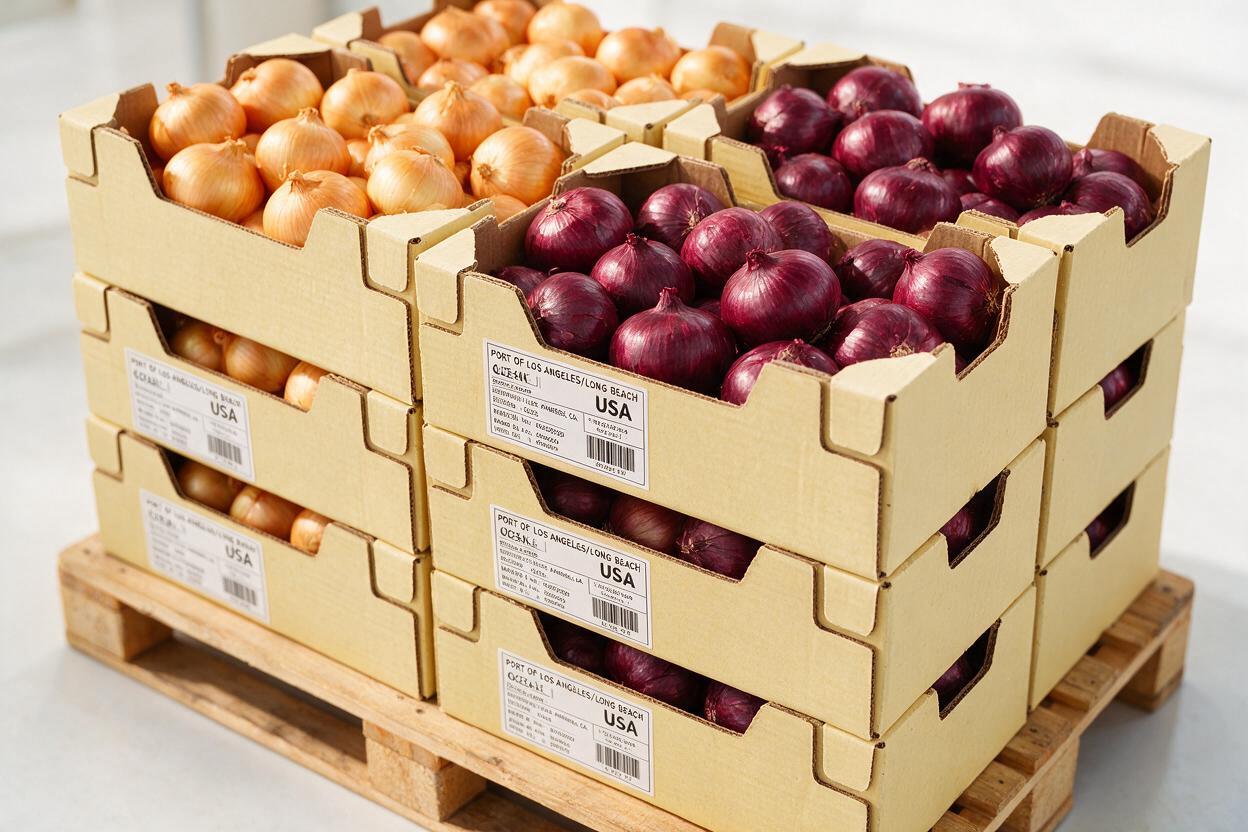
In North America, yellow onions dominate volume, prized for their balanced sweet-savory flavor and long storage life. White onions are favored in Mexican-style and ethnic cuisine, while red onions add color to salads and sandwiches. Chinese exporters tailor their program to whichever color and size profile the buyer's market favors, often shipping a mix across the season.
Bulb size is a key specification, with medium and jumbo grades commanding different premiums depending on the end use.
Phytosanitary and import compliance
Entering North American ports demands rigorous compliance. Shipments must meet import documentation, fumigation or cold-treatment requirements set by plant health authorities, and packing material must be clean and certified. Chinese exporters work with licensed fumigation facilities and maintain full traceability from field to container.
Grading and quality standards
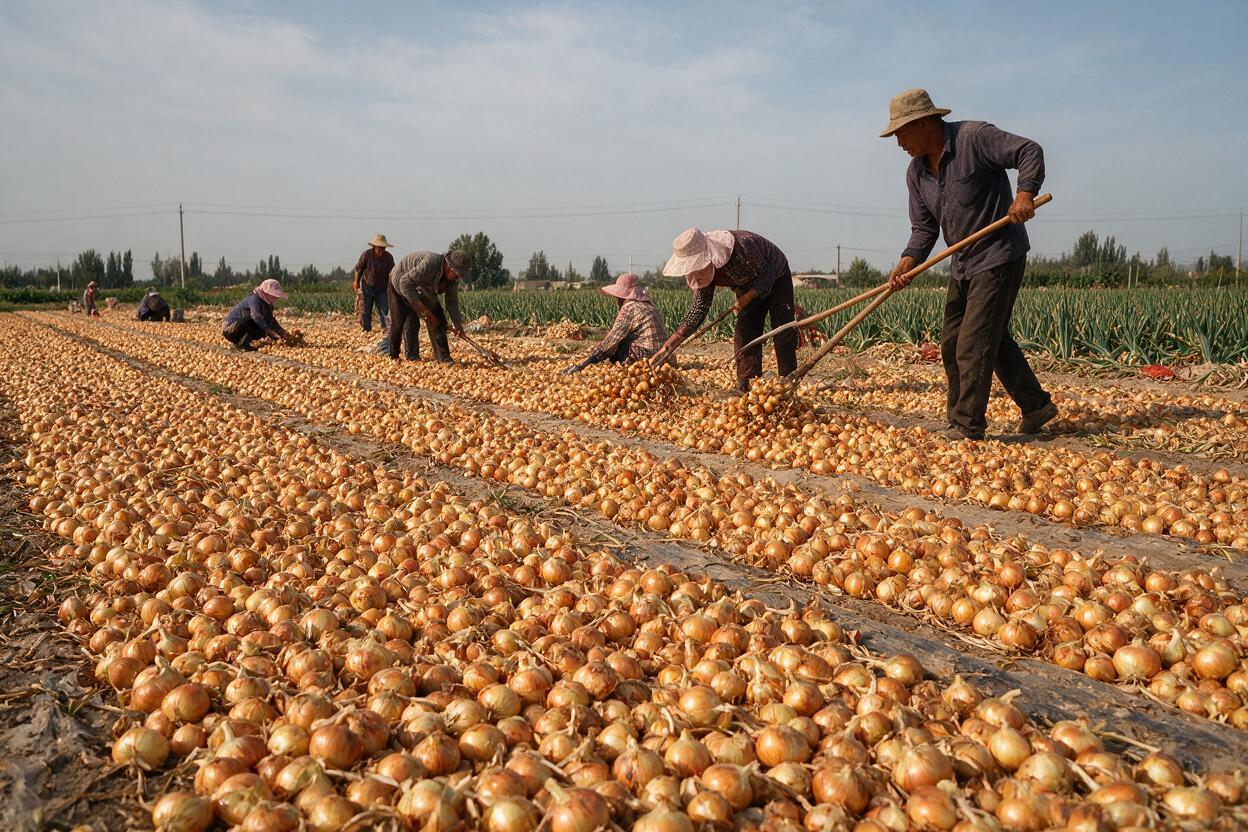
Export-grade onions are sorted by size, firmness and skin firmness, with cracked, sprouting or soft bulbs removed. A clean, single-skin bulb with a tight neck stores better and arrives in better condition. Modern grading lines use screens and vision systems to separate bulbs to the exact size tolerances North American buyers specify.
Uniformity is what builds long-term relationships; a pallet that shows consistent grade earn repeat orders.
Packing and container loading for the voyage
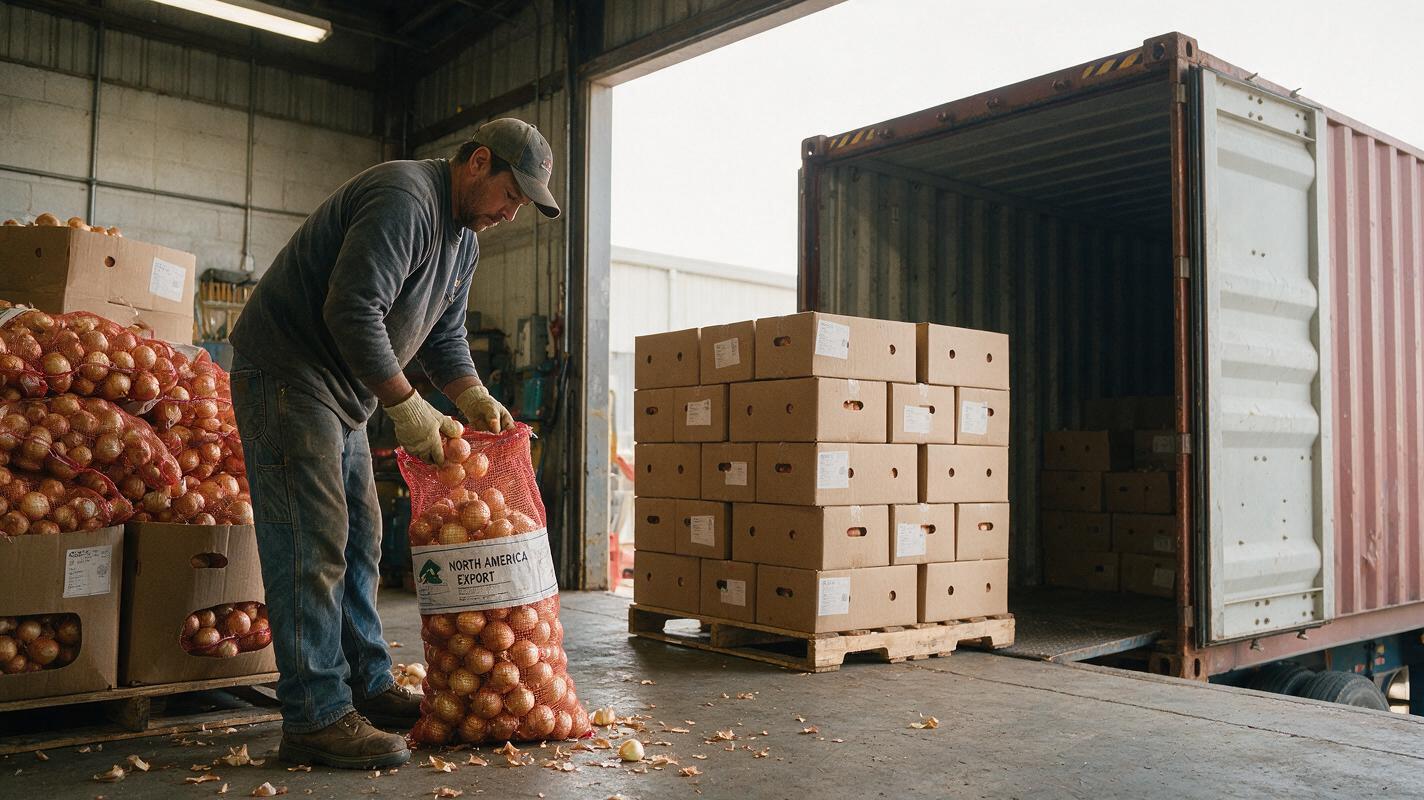
Onions travel best in breathable mesh bags or vented cartons that allow airflow and reduce moisture buildup. Exporters load containers to maximize volume while leaving enough airspace for circulation, and they document the load plan for the consignee. A well-planned container reduces breakage and shrivel during the ocean crossing.
Choosing a supplier for the North American trade
A reliable Chinese onion exporter combines the right varieties, clean grading, certified phytosanitary treatment and disciplined cold chain. Clear documentation and honest communication about sizes and availability help importers plan their sourcing confidently.
With these fundamentals in place, Chinese onions increasingly satisfy the exacting standards of North American buyers.