



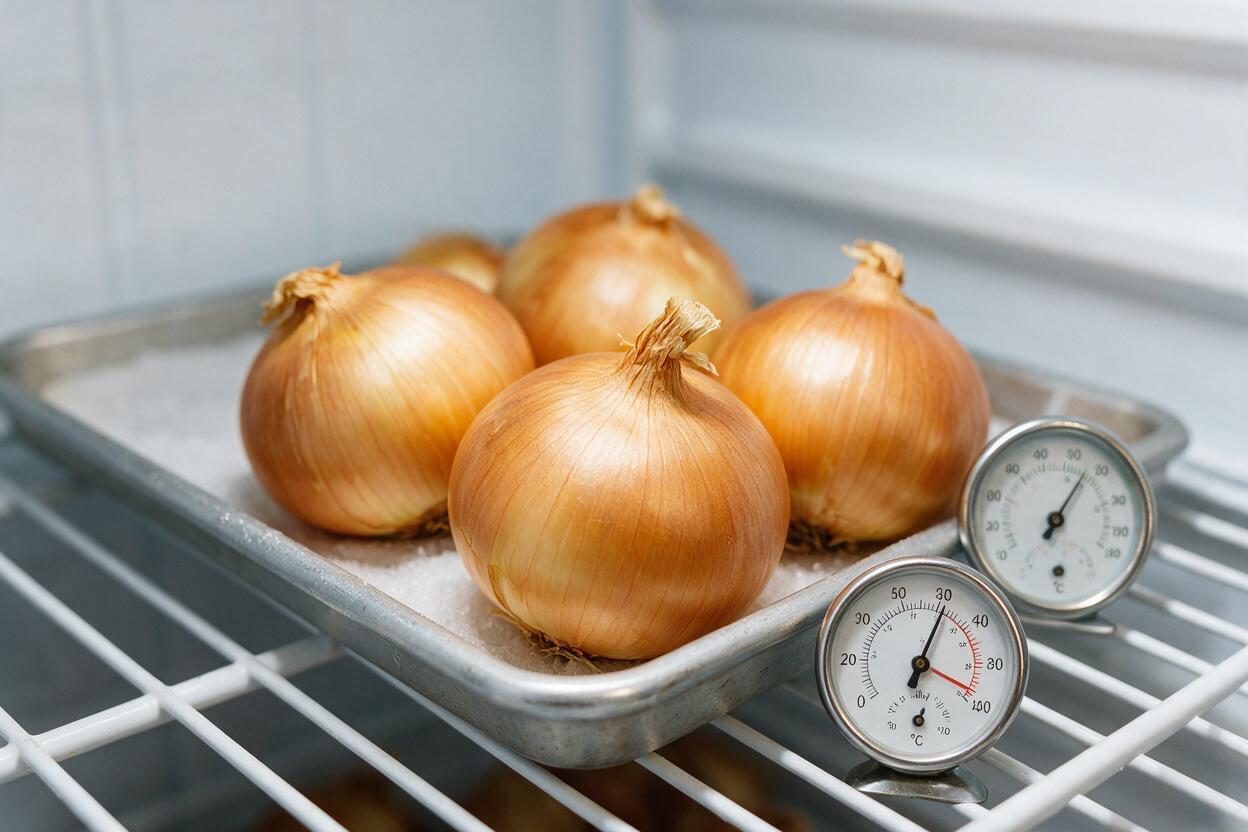
Onion Precooling & Cold-Chain Export from China: Quality Guide
Onion is one of the most traded vegetables in the world, and getting it from a Chinese field to a foreign market in prime condition depends almost entirely on how it is cooled and handled after harvest. Export-grade onion is no accident - it is the product of careful curing, rapid precooling and a disciplined cold chain that locks in quality and extends storage life.
This article explains the postharvest technology that separates a premium onion export program from one that arrives soft, sprouting or rotten. For importers, understanding this process is the key to choosing a supplier whose onions arrive crisp and sweet.
Curing: the foundation of onion keeping quality
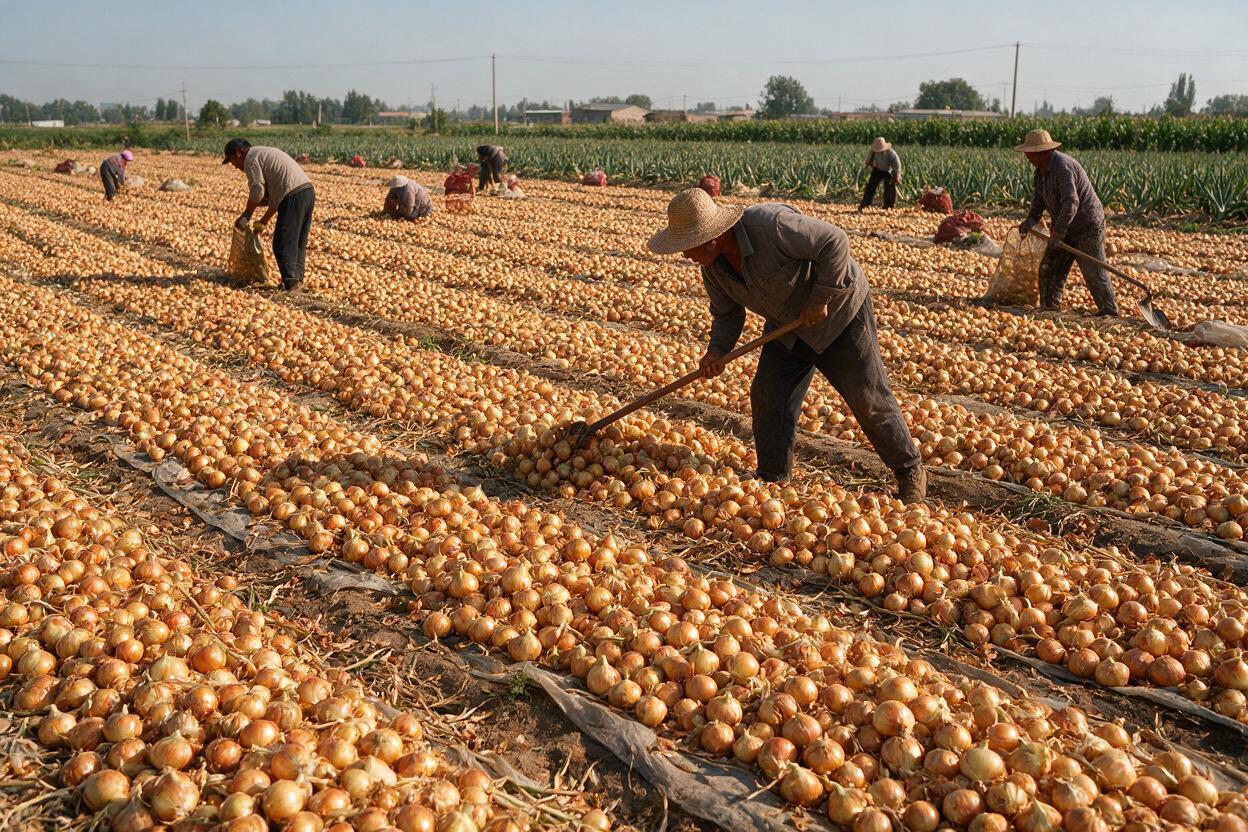
Onions must be properly cured after harvest to dry the outer skins and neck, sealing the bulb against moisture loss, decay and sprouting. In the field or in ventilated storage, warm dry air flows over the onions to create tight, papery scales. A well-cured onion has a dry neck and clean, intact skin - the first guard against rot during long transit.
Curing also develops the onion's natural protective layers. Skipping or rushing this step leaves a vulnerable bulb that is far more likely to soften, sprout or develop disease roots by the time it reaches the buyer.
Precooling and temperature management
Once cured, onions are cooled towards their ideal storage temperature - around 0-2°C with moderate humidity for most sweet and pungent varieties. Rapid precooling pulls field heat out quickly to slow respiration and aging, preserving firmness, flavor and sugar content. Forced-air and cold-room cooling are the common methods used at Chinese packing houses.
Temperature management also controls sprouting and rooting. Consistent, low-temperature storage suppresses the growth that ruins onions in transit, while wide temperature swings encourage sprouting and rot. Precise control during staging and loading into the reefer container is what keeps quality intact.
Shelf life, storage and reaching market fresh
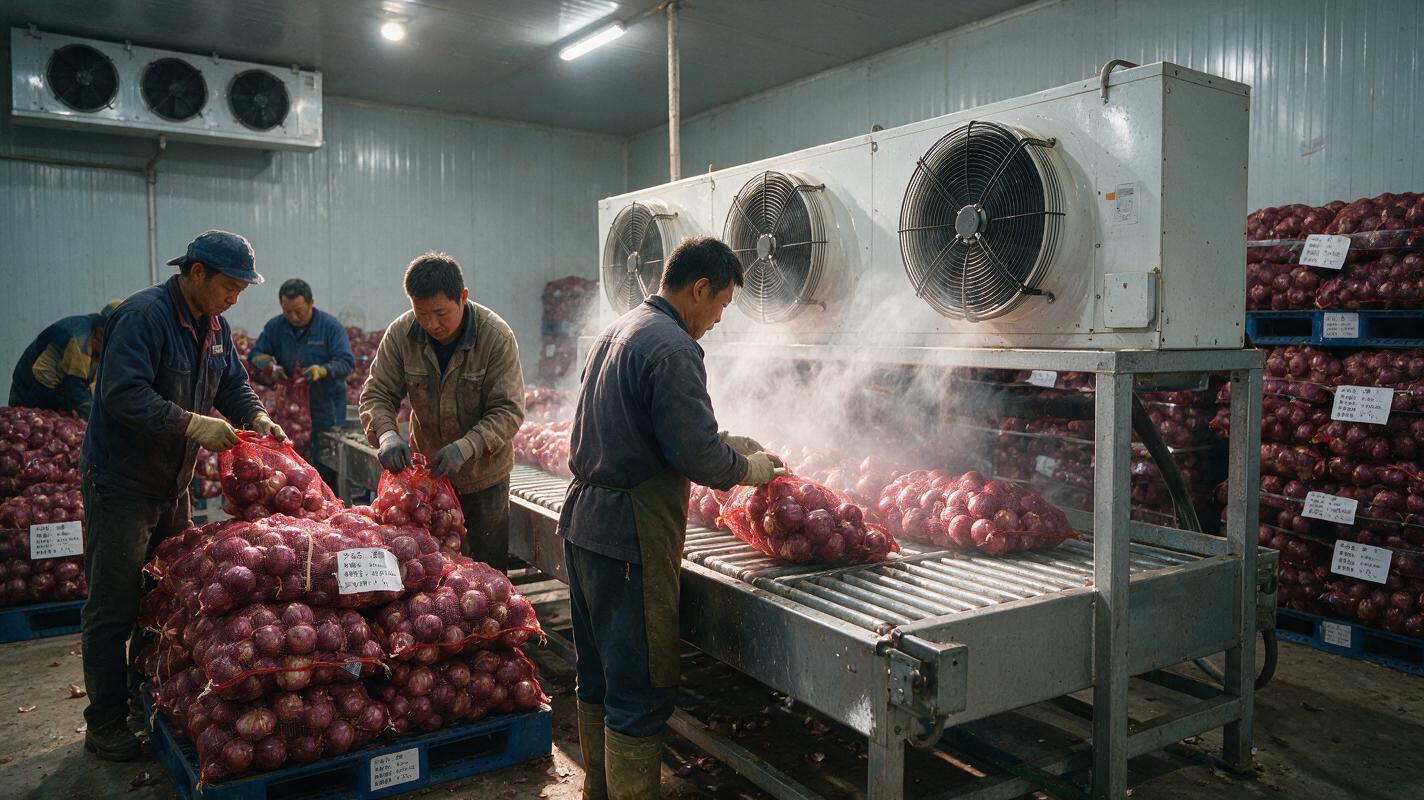
Export-grade onions are stored in ventilated, temperature-controlled warehouses that keep the crop dormant and firm for months, smoothing seasonal supply. Before shipment, onions are regraded, sorted and packed to spec, then loaded into refrigerated containers set to the correct temperature and ventilation for the voyage.
For importers, sourcing onion from China with a verified cold-chain program means receiving firm, sweet, long-storing bulbs rather than a decaying load. A supplier that masters curing, precooling and storage delivers onions with maximum shelf life and a dependable margin.