







Garlic Disease & Pest Management: Thrips Control for Quality Export
Garlic quality is decided long before packing — it is decided in the field. Thrips, along with a set of fungal and viral diseases, are the main threats that can mark, shrivel or discolor bulbs and destroy export value. Managing them with an integrated approach is what separates premium export garlic from the rest.
The Thrips Threat
Thrips are tiny insects that rasp leaf surfaces and feed on plant sap, leaving silver streaks that weaken the plant and reduce bulb size. In severe cases they transmit viruses. Warm, dry spells can trigger rapid build-up, so monitoring is essential from mid-spring through bulbing.
Integrated Pest Management in Practice
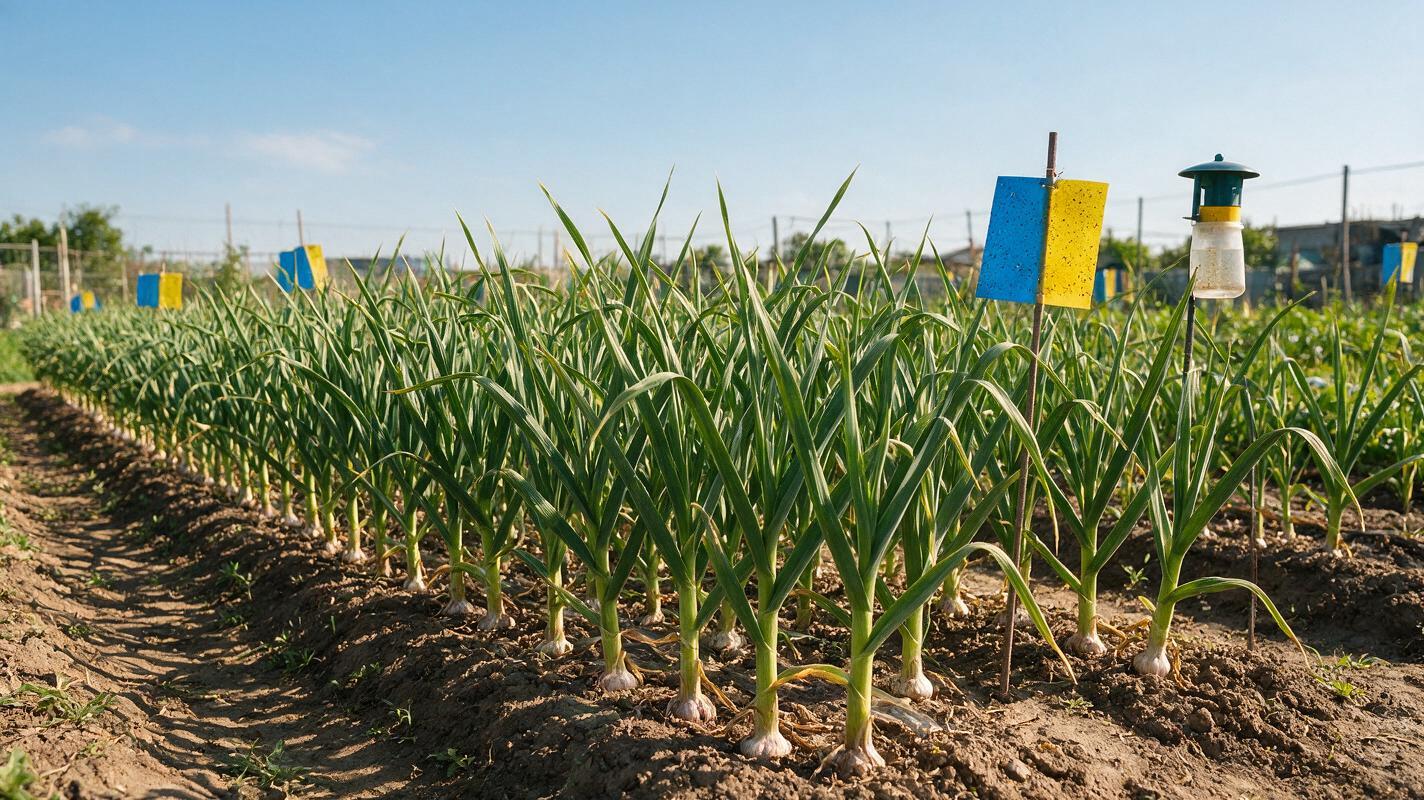
Successful export farms combine tactics rather than relying on sprays alone. They rotate garlic with non-host crops, use healthy certified seed, space plants for airflow, and deploy sticky traps and beneficial predators such as predatory mites to keep thrips in check.
Residue-Safe Chemical Strategy
When intervention is needed, growers choose products with short pre-harvest intervals and low residue profiles, applied at the right stage with proper equipment. Documented programs — including spray records, withholding periods and residue testing — support the certificates foreign authorities request at the border.
Disease Watch
White rot, purple blotch and downy mildew can spread quickly in cool, wet conditions. Early field scouting, resistant varieties, proper curing and clean storage are all part of the same discipline that protects both yield and export-grade appearance.
From Field to Export Dock
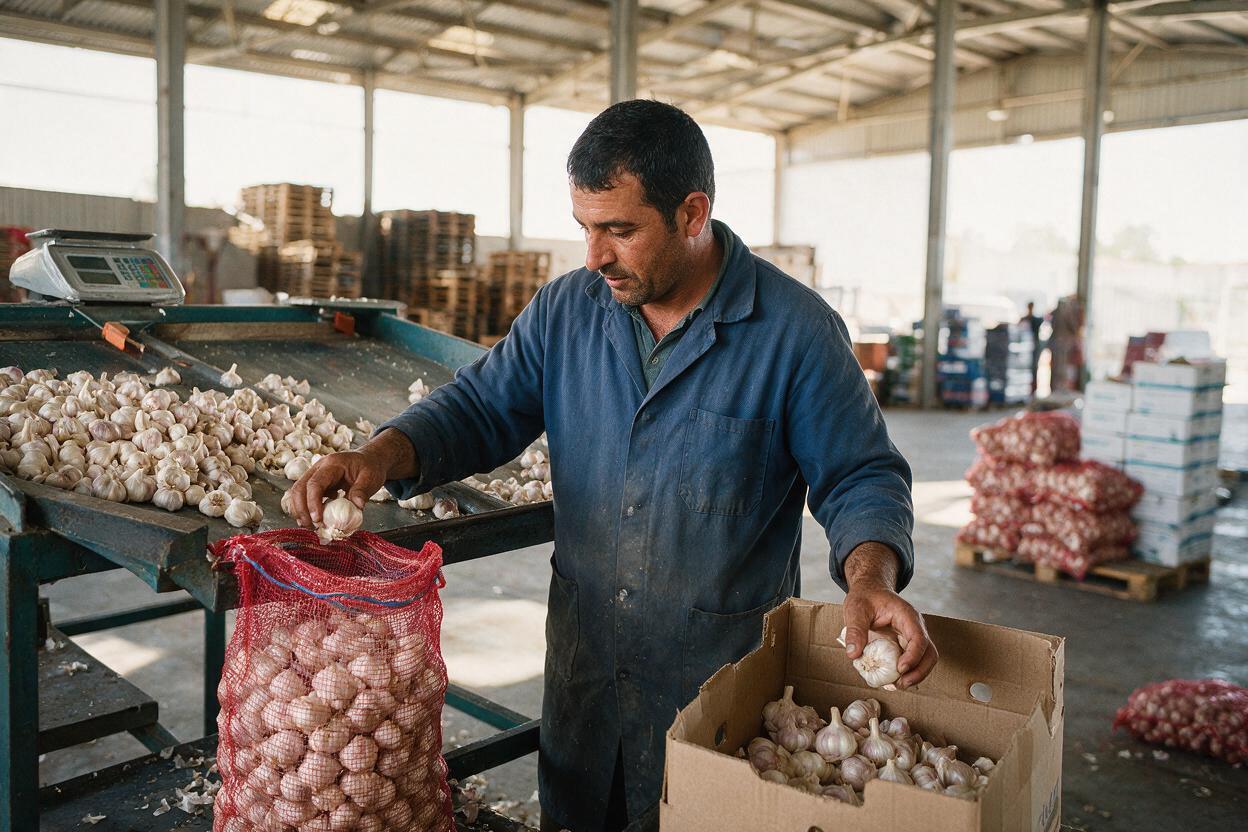
After harvest, bulbs are cured, cleaned and graded, with affected bulbs removed so that only clean, intact heads reach the packing line. This integration of field and post-harvest quality control is what gives trusted exporters their consistency.
Pest and disease management is the invisible work behind premium garlic. When you partner with a grower that takes IPM seriously, you get cleaner bulbs, easier compliance and a steadier supply.