







Hybrid Seed Breeding and Variety Development for Export Carrots
Carrot Breeding Starts with Seed
The consistency buyers expect from export carrots — straight shoulders, uniform diameter, deep orange colour and a clean core — is largely decided in the seed before a single seed is sown. Chinese breeders combine conventional line selection with marker-assisted techniques to develop hybrid varieties adapted to local soil while delivering the appearance and sugar content demanded overseas.
Traits That Drive Export Acceptance
Modern export carrot programmes focus on a small set of heritable traits. Shoulder-to-tip uniformity reduces sorting loss and raises pack-out rate. Deep orange pigmentation signals high beta-carotene, a key selling point for health-conscious markets. A low incidence of split and secondary roots improves appearance, while a well-balanced sugar-to-fibre ratio satisfies processors selecting for snacking and juicing grades. Resistance to common root diseases also matters, letting growers use fewer inputs and produce cleaner, longer-season crops.
From Breeding Trial to Field Scale
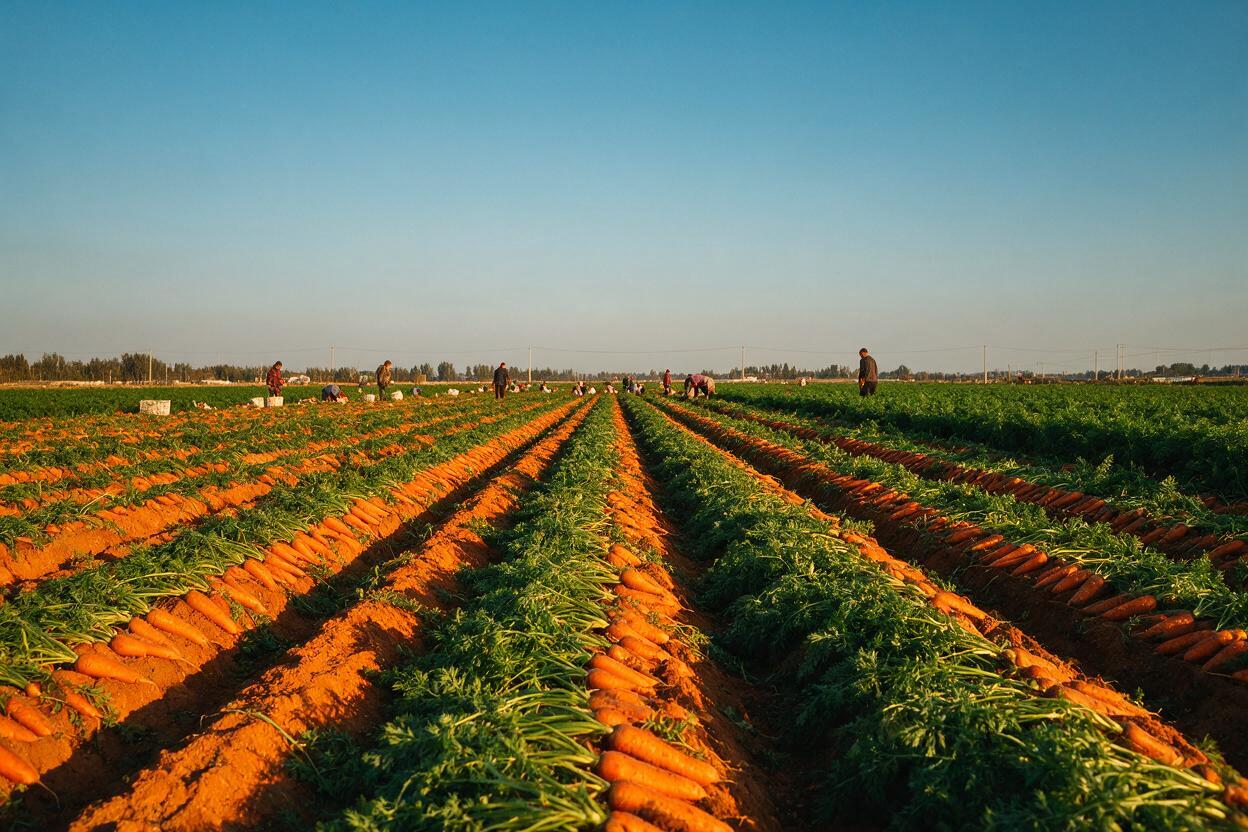
Promising hybrids move from small trial plots to multi-location yield tests across Shandong and other production areas before commercial release. Breeders evaluate germination uniformity, root shape stability under different water regimes, storability and adaptation to mechanical harvest. Only varieties that hold their colour and crunch through cold storage are recommended for export, because a root that looks good at the packhouse must still look good when it arrives on a foreign shelf weeks later.
Seed health certification, including testing for viruses and fungal pathogens, protects both the exporting industry's reputation and the importing country's phytosanitary standards. Certified healthy seed is the foundation of a reliable export supply chain.
Working with Chinese Carrot Breeders and Growers
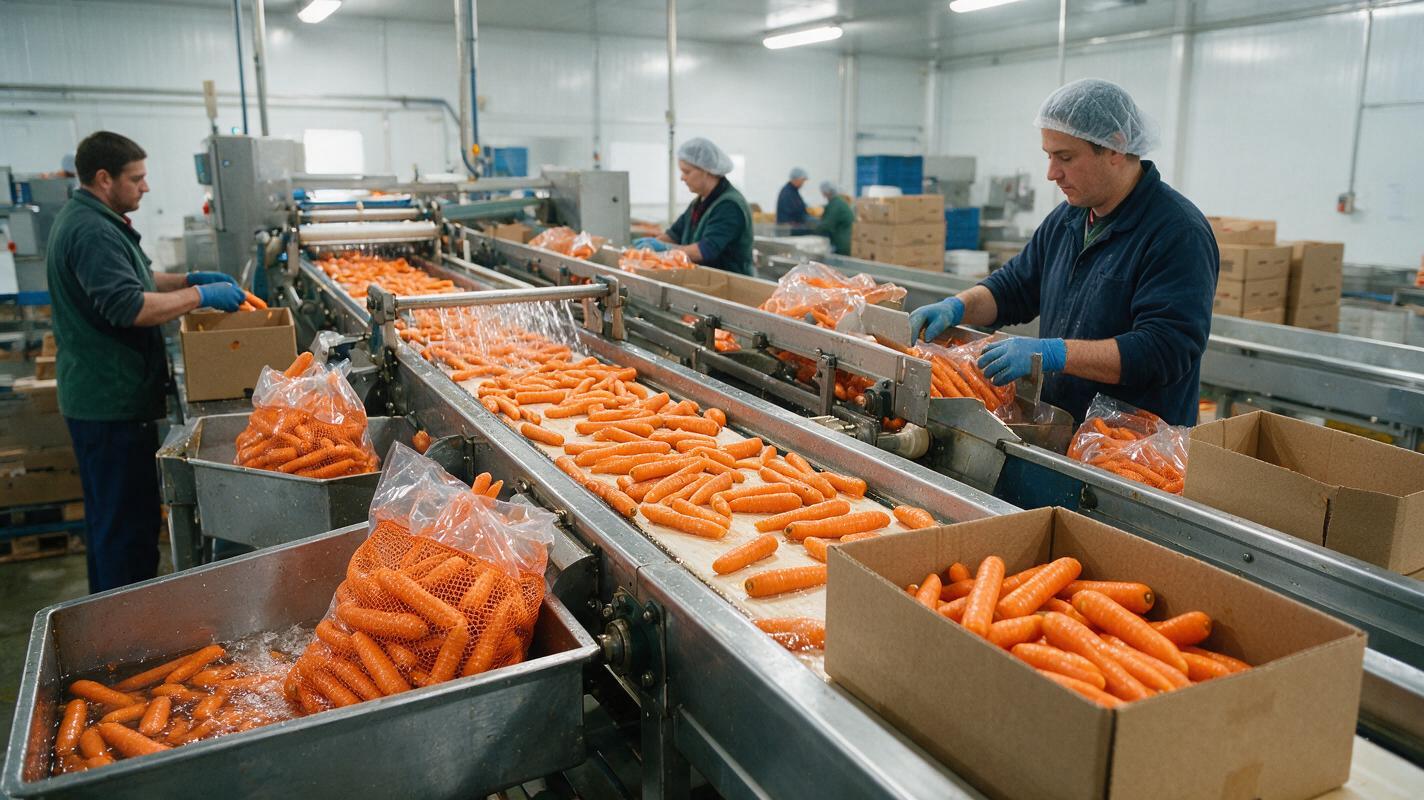
Importers and buying groups can request trial data, root uniformity photos and yield records to compare varieties before committing to volume. Ask which hybrid performs best for your target grade — fresh market, processing or juicing — and confirm the supplying grower can maintain the variety consistently across the season. A strong breeding pipeline means new, better-adapted hybrids are continuously available, giving buyers more options each year.