







The Chinese Carrot Harvest Calendar: Seasonality and Export Windows
Carrots come out of the ground in China almost every month of the year. That is not by luck - it is the result of growing regions spread across different climates, each with its own planting and harvest window. Together they add up to a dependable export calendar.
Why China harvests year-round
The country spans temperate, plateau and subtropical zones. Producers match carrot varieties and planting times to local conditions, so while one region is seeding spring carrots, another is lifting mature roots from storage or finishing a winter crop.
Cooler northern and elevated regions supply carrots in summer and early autumn, when lower night temperatures produce crisp, sweet roots. Warmer southern and spring-planted areas fill supply gaps in the shoulder seasons, and long-storage carrots extend availability through winter.

A regional crop window
The result is a rolling harvest map. Spring carrots come out in the south as summer approaches; mid-season roots follow from central and northern fields; autumn carrots mature as temperatures drop; and well-managed storage keeps firm, fresh-tasting carrots on the market during the coldest months.
Because export orders are sized against these windows, buyers can plan purchases around known seasons rather than hoping a single region stays productive all year.
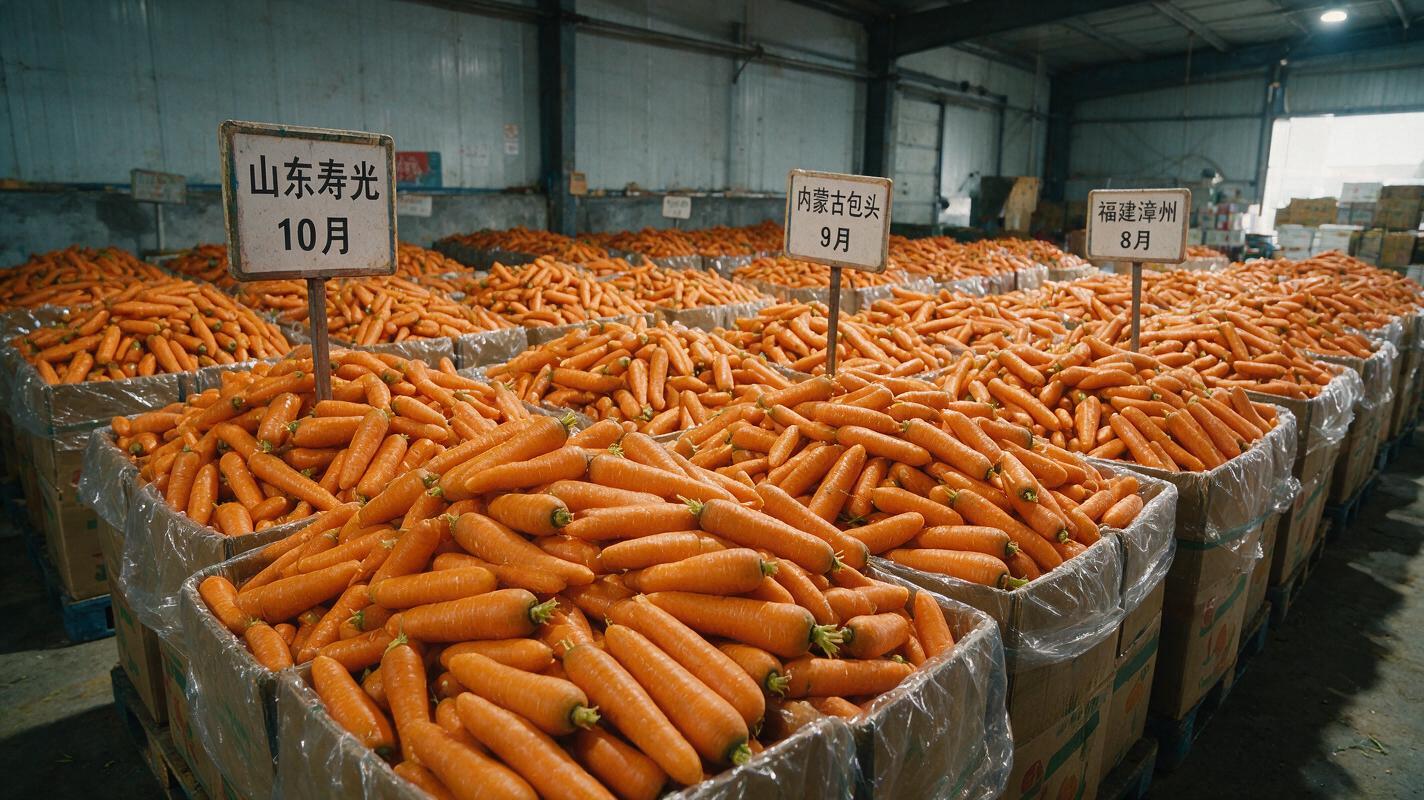
Planning supply against the calendar
Chinese exporters maintain a harvest and supply calendar that ties each batch to its origin region and expected window. This helps them quote realistic volumes, avoid quality dips between seasons and keep cold-chain and shipping capacity ready when a crop comes in.
For importers, the practical benefit is continuity: carrots can be contracted across the year from one trusted supplier instead of juggling multiple origins. With China's multi-region carrot production and a clear seasonal calendar, steady fresh supply is a reliable, planable reality.