




Winter Greenhouse Carrots from China: Fresh Supply Beyond the Harvest Season
Carrot is usually associated with a single outdoor harvest window, but greenhouse and protected cultivation in China now make fresh, tender carrots available well beyond the traditional season. For importers and foodservice buyers who need a steady, year-round supply, winter greenhouse carrots are a smart sourcing option.
This article explains how Chinese growers produce high-quality winter carrots under cover, what makes them different from field crops, and how exporters grade and pack them for overseas markets.
Protected cultivation closes the supply gap
Outdoor carrot harvests peak in clearly defined seasons, leaving gaps in late autumn and early spring when supplies tighten and prices climb. Greenhouses, high tunnels and plastic-covered beds let growers plant in waves so that fresh carrots are available during the shoulder months when open fields cannot produce.
For buyers, this consistency matters. Instead of relying on imported storage carrots or expensive air freight from distant origins, a buyer can source fresh winter carrots from a protected crop and keep menus and retail shelves fully stocked.
Quality differences in greenhouse carrots
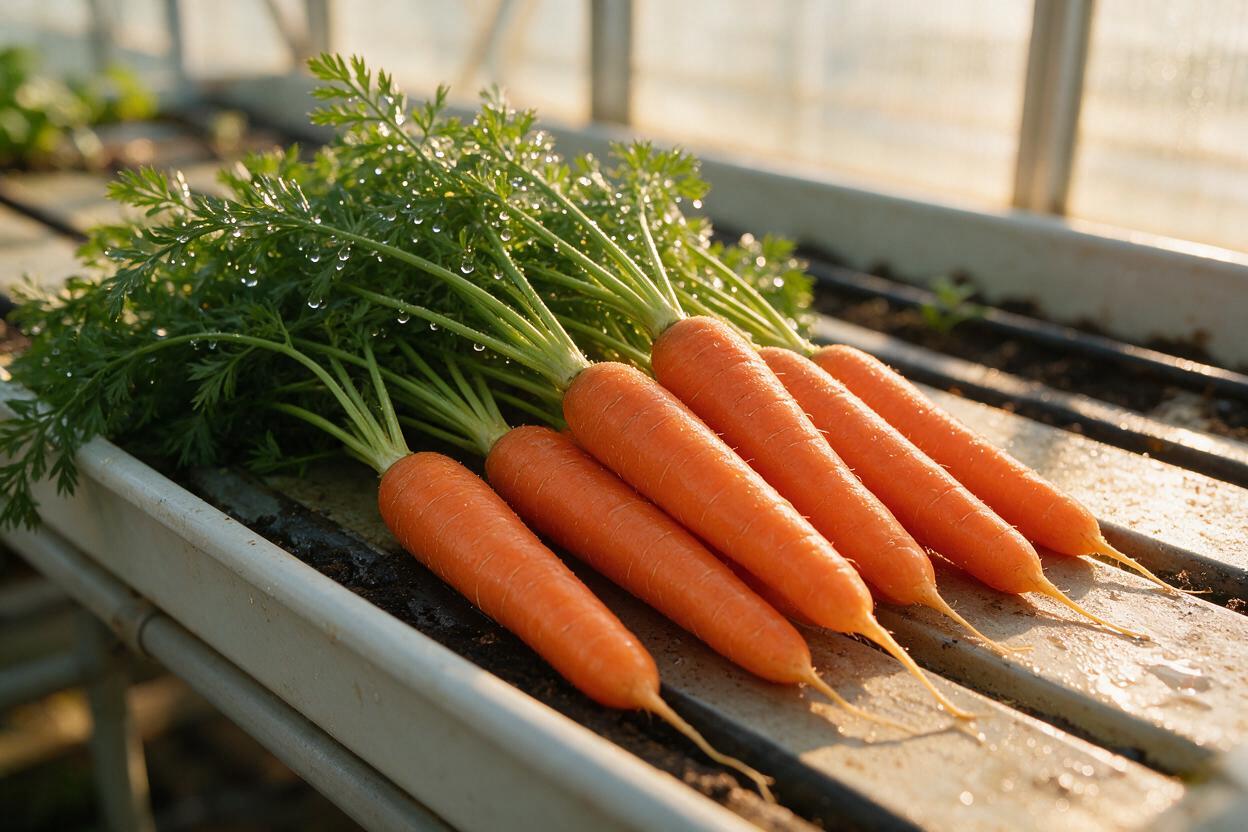
Carrots grown under cover often have a tender, clean texture and a crisp bite. Because the environment is controlled, growers reduce the pest pressure that scars outdoor roots, and the evenly tended beds produce smooth, well-shaped carrots that grade cleanly. Many buyers find greenhouse carrots have a mild, sweet flavor that works well in fresh-cut and ready-to-eat packs.
The trade-off is that protected crops generally cost more to grow, so winter greenhouse carrots command a premium that reflects their freshness and reliability.
Season extension techniques
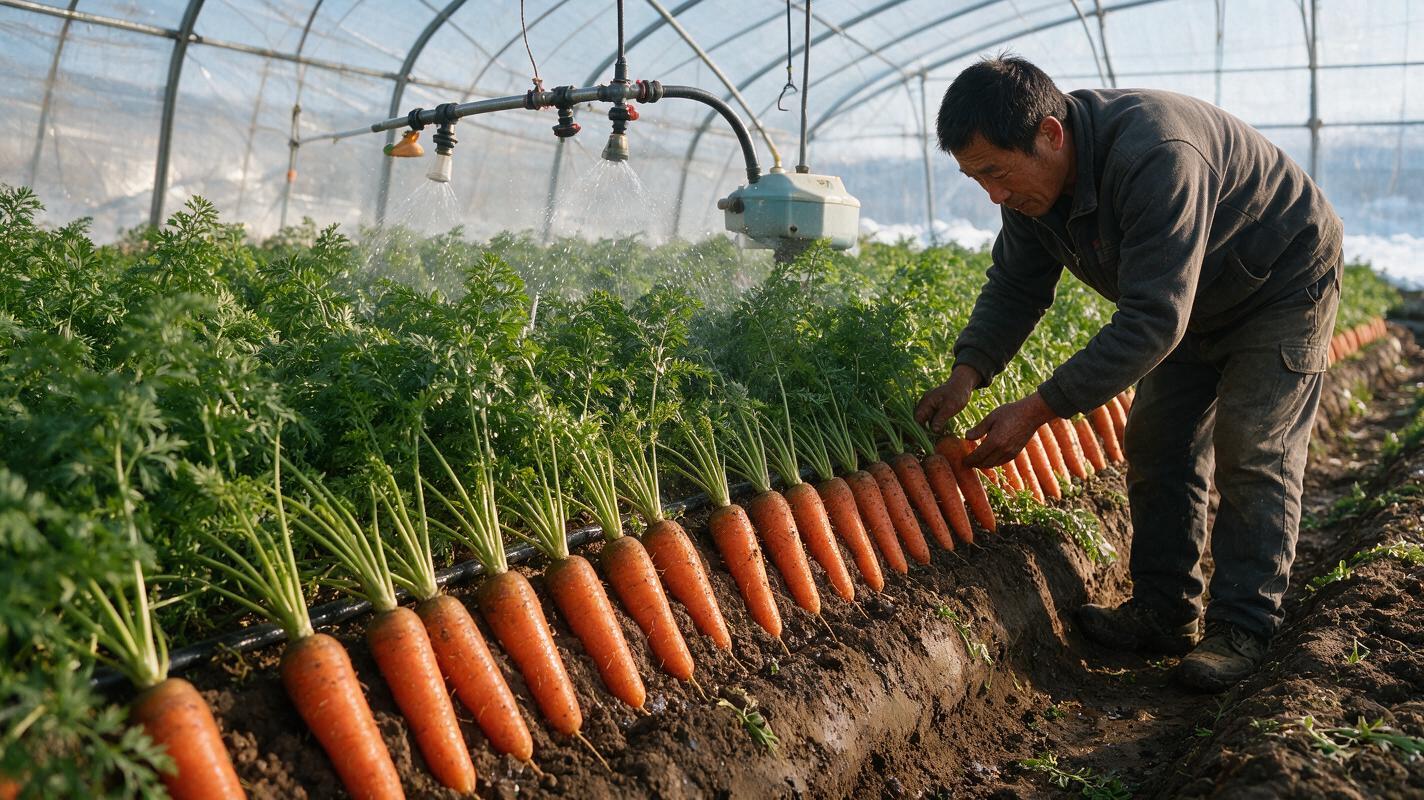
Chinese growers use several tools to keep winter carrots growing. Semi-transparent greenhouses capture daylight and warm the soil, while drip irrigation and mulching hold moisture and heat. In colder regions, floating row covers and low tunnels add another layer of protection against frost. This combination lets farmers keep pulling market-ready carrots through weeks when open fields lie frozen.
Grading and washing for export
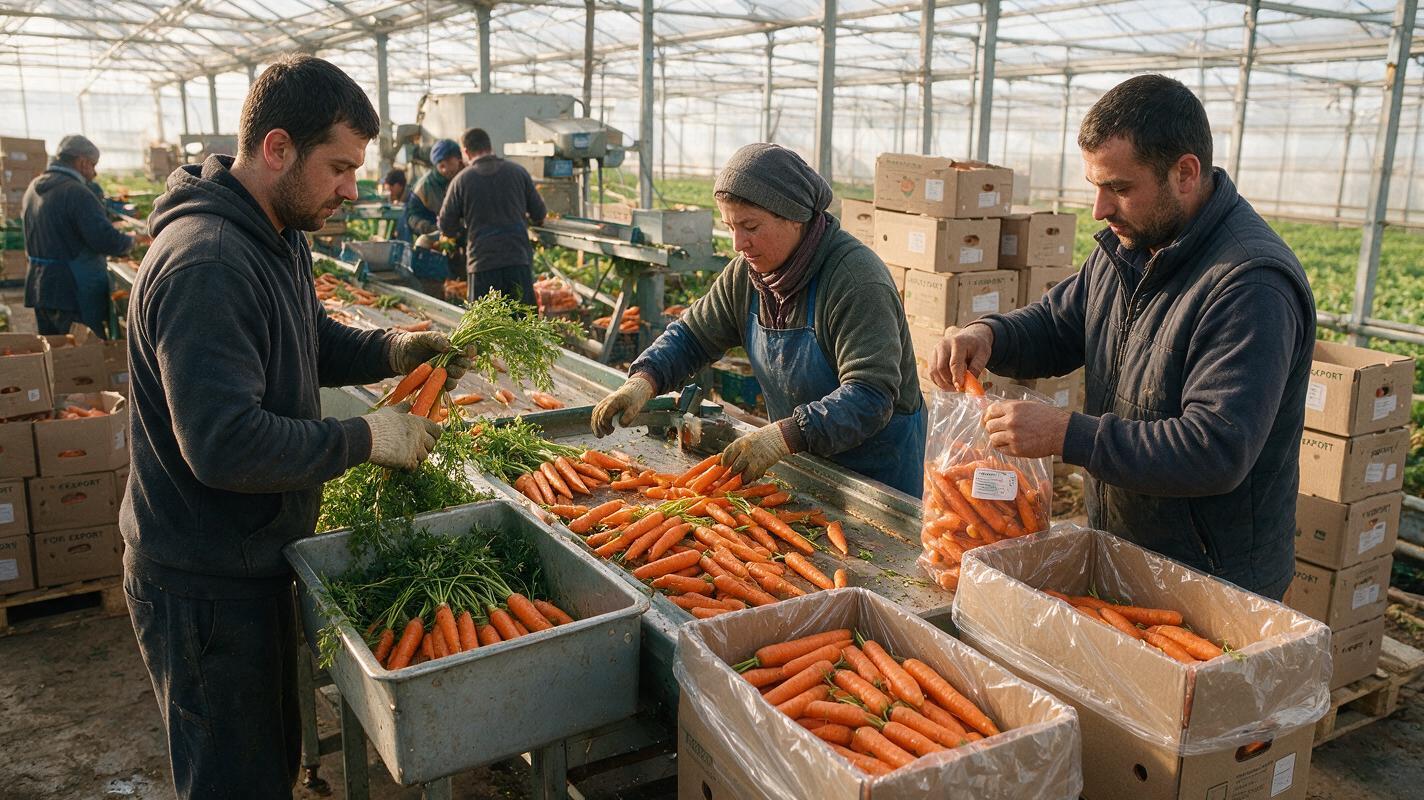
Winter greenhouse carrots are usually sorted by length, top diameter and root condition. Export lots are washed, trimmed and divided into grades such as baby, cut-and-peeled, and uniform whole roots. Clean, bright color and smooth skin are the marks that separate export-grade carrots from lower grades destined for processing.
A well-run washing line removes soil without bruising, and careful drying prevents the moisture loss that makes roots limp in transit.
Packing that preserves winter freshness
Because winter carrots are tender and quick to lose water, packing must protect them from the moment of harvest. Permeable bags with micro-perforations balance humidity and airflow, while refrigerated transport keeps the crop crisp. Exporters often supply both loose bulk packs for processing and branded retail bags for supermarkets.
Why winter greenhouse carrots are worth sourcing
For buyers who need continuity, protected-cultivation carrots remove the uncertainty of seasonal gaps. They offer fresh flavor, clean grading and a reliable cold chain, all backed by a supplier who can schedule plantings to match your demand timeline.
By pairing open-field volume with greenhouse precision, China now delivers fresh, sweet carrots to global tables all year long.