




Optimized Carton Stacking for Bell Pepper Exports from China
A shipment of bell peppers can lose value in transit if cartons collapse, fruit bruise under pressure, or airflow is blocked inside the container. How the cartons are designed and stacked matters as much as the quality of the fruit inside. Chinese exporters have refined both to protect bell peppers from field to port.
Carton design for strength
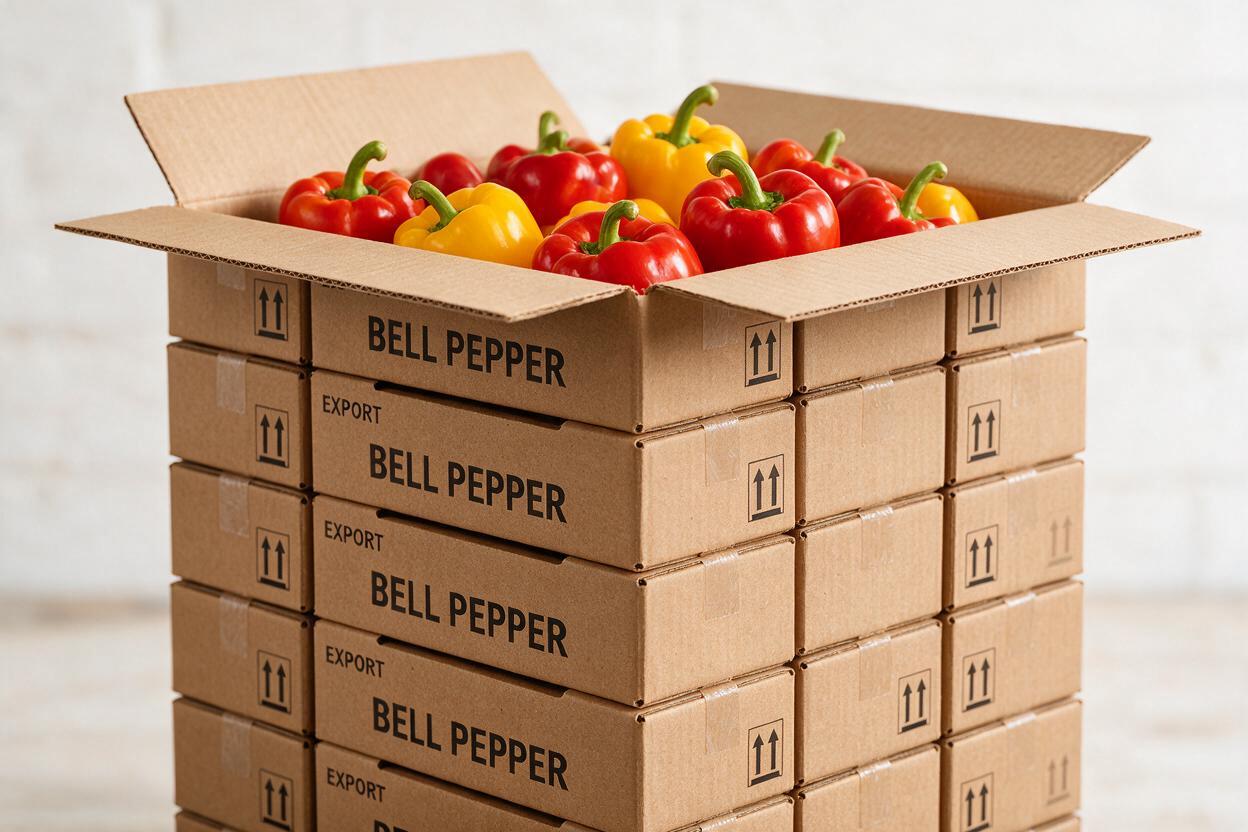
Export bell peppers travel in five-layer corrugated cartons engineered for compression resistance. Panel thickness, flute structure and corner strength are matched to the stacking height and the weight of fruit per box, so lower layers hold firm without crushing the fruit beneath them.
Ventilation slots let cool air reach every box in a stack. Because peppers release heat and moisture after harvest, correct airflow keeps condensation low and slows decay, which is especially important for long sea freight.
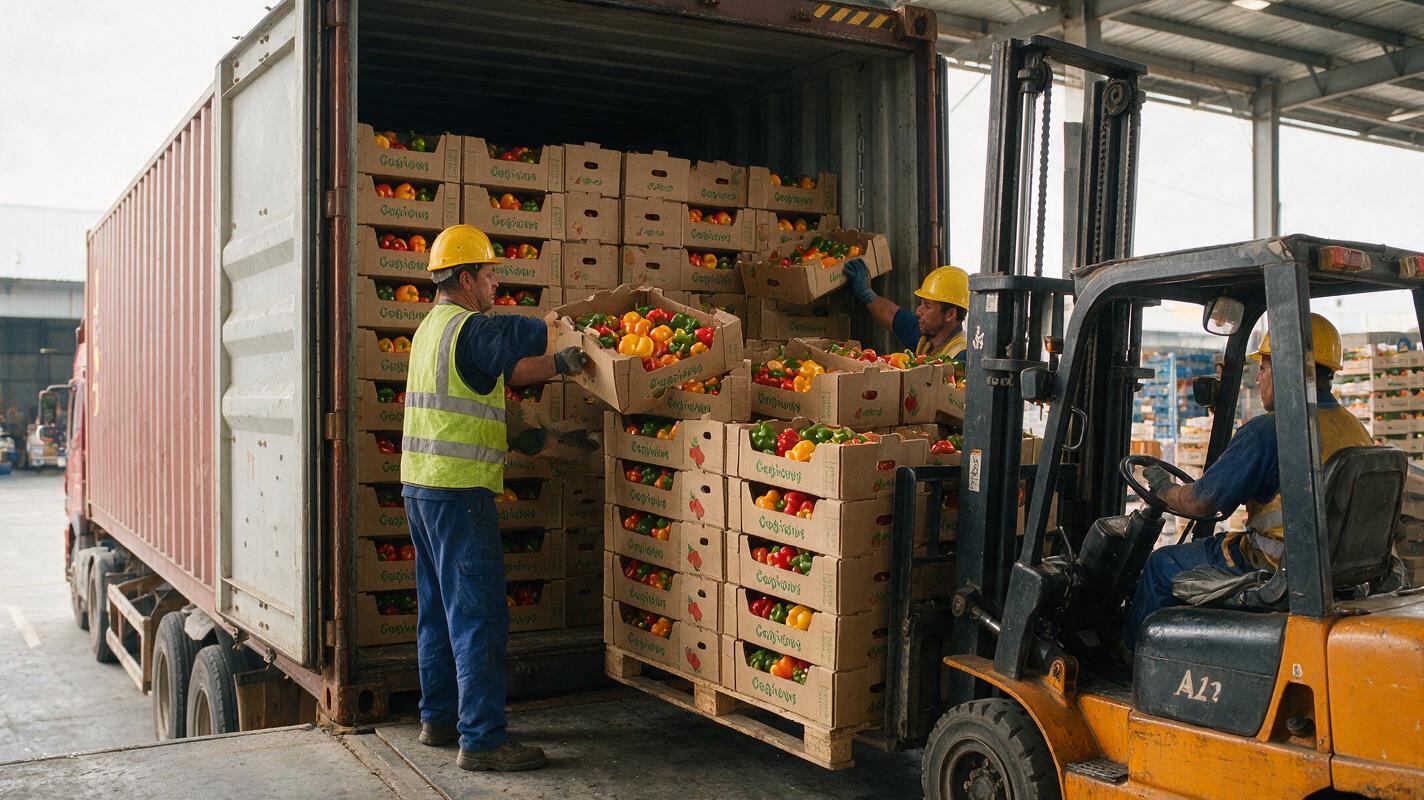
Stacking patterns that protect the load
Packers use column-stack or interlocked patterns depending on carton strength and fruit weight. Column stacking transfers weight straight down through the strongest points, while interlocking binds the load together for stability on rough roads.
Packing plans specify how many layers go on a pallet, whether cartons are aligned or offset, and how pallets are arranged in the container. The goal is even weight distribution and full airflow around every carton.
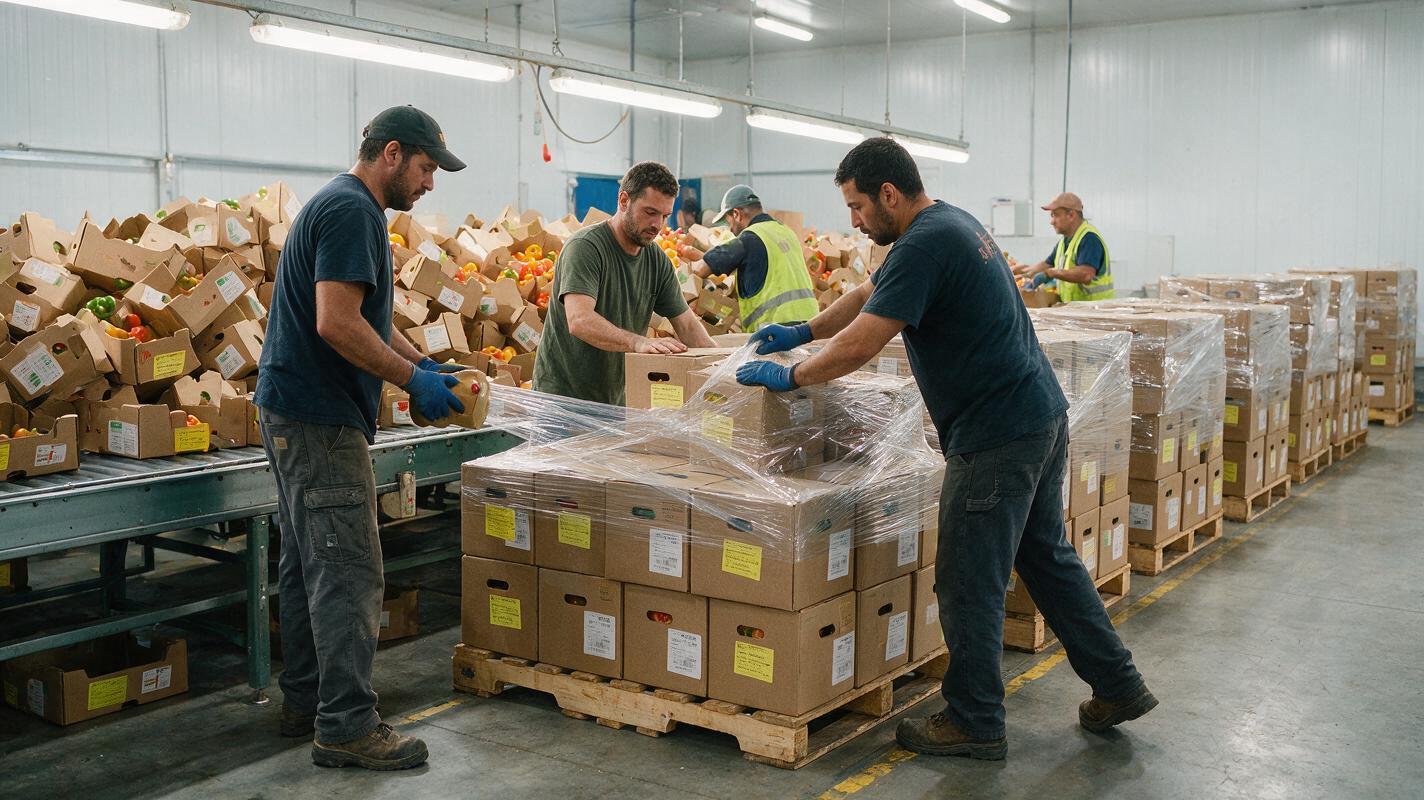
Loading and cold chain together
Precooled peppers are loaded onto pallets with corner posts and stretch-wrap, then positioned in the container so air can circulate from the refrigeration unit to the door. Stacking markers and loading diagrams guide each step.
For importers, a well-planned carton and stacking system means fewer damaged boxes, more consistent arrival condition and better use of container space. When Chinese exporters combine strong boxes, the right stacking pattern and a disciplined cold chain, bell peppers arrive exactly as they left - firm, glossy and ready for retail.