




Pickled Bell Pepper Preserves in Glass Bottles from China
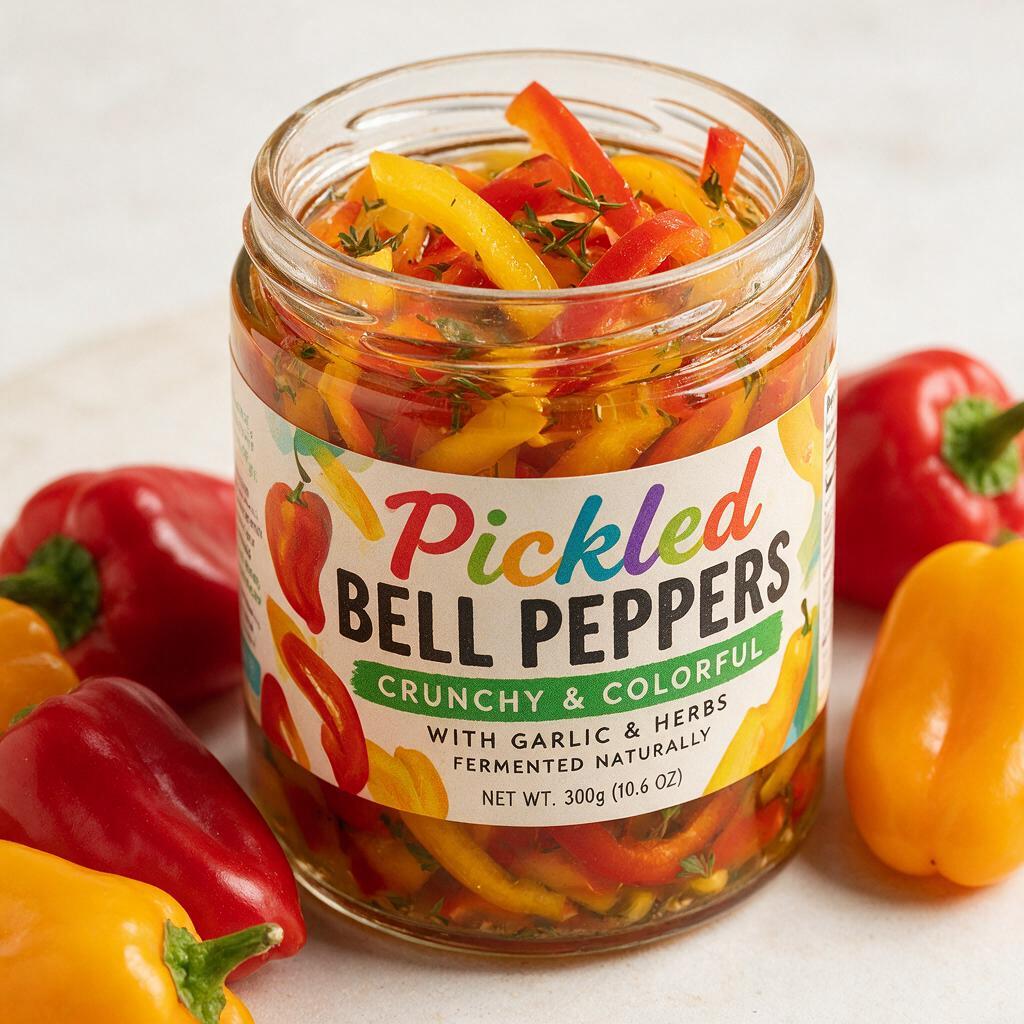
Fresh bell peppers are a perishable commodity, but the same fruit takes on a long shelf life and a new flavor profile when it is pickled and preserved in glass. Chinese processors have grown skilled at turning surplus and cosmetically imperfect red and yellow peppers into crisp, tangy preserves that travel thousands of kilometers without refrigeration. For buyers of specialty foods, this opens a dependable supply channel that is less exposed to freight cost spikes and harvest windows.
The process begins with sorting. Peppers destined for pickling are chosen for firm flesh and thick walls, because soft, thin-walled fruit softens quickly in brine. After washing, the peppers are destemmed and sliced into even strips or rings, then blanched briefly. Blanching sets the bright red and yellow color, reduces enzymes that cause off-flavors, and makes the flesh slightly translucent, which buyers associate with proper curing.
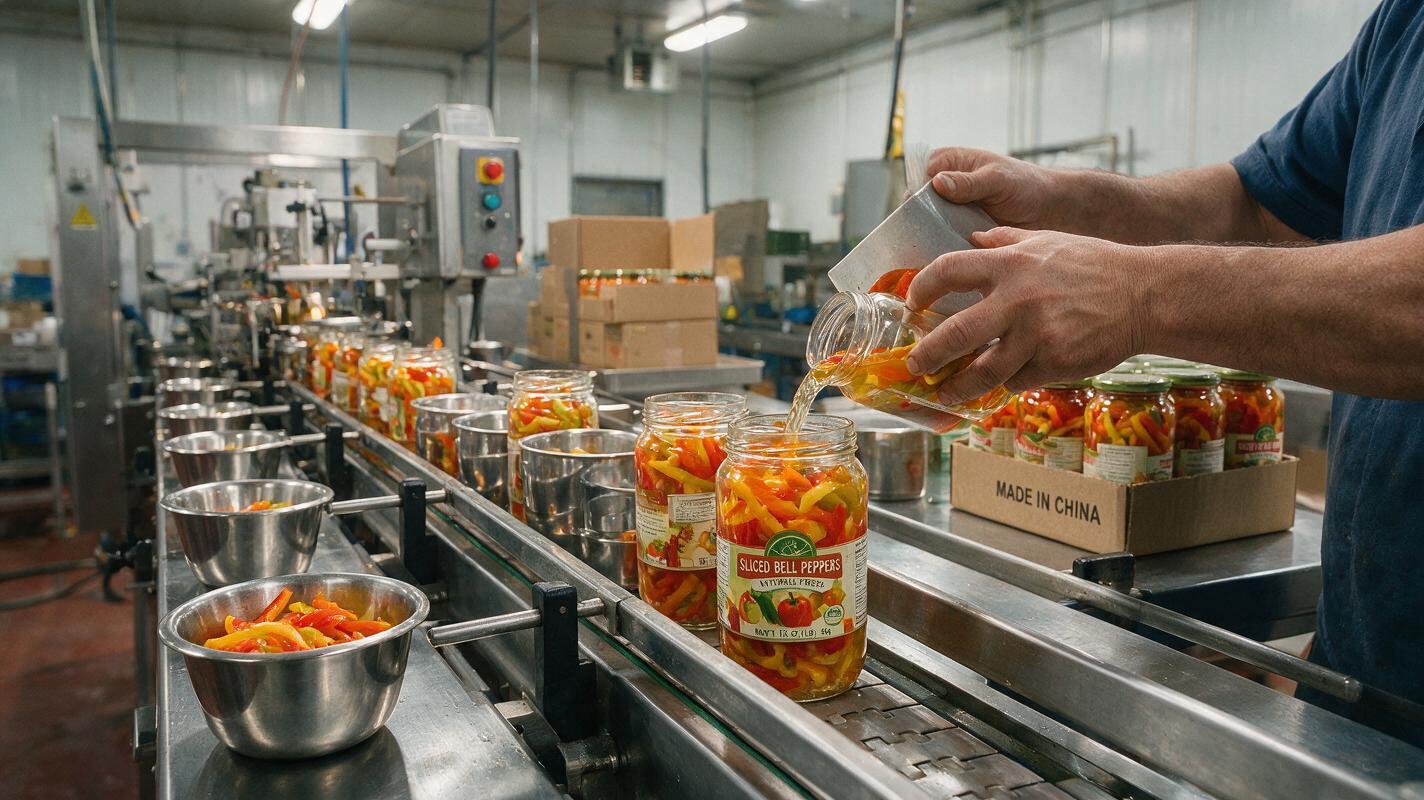
The brine is the heart of the product. A typical Chinese export formulation combines water, vinegar, sugar, salt, and citric acid, often with garlic and dill for aroma. The acid level is calibrated to a pH low enough to be shelf stable without chemical preservatives, while the sugar-to-acid balance decides whether the final profile is sweet, sour, or balanced. Some buyers ask for an infused brine with chili or smoked paprika so the preserve doubles as an ingredient.
Once the jars are filled and the headspace is set, the bottles go through a pasteurization tunnel. Raising the internal temperature to the target core value and holding it eliminates spoilage organisms while keeping the peppers crisp. Because glass is fragile under thermal shock, the heating and cooling ramps are controlled carefully. A properly pasteurized jar forms a vacuum when it cools, which pulls the lid down into a concave shape that inspectors read as a seal indicator.
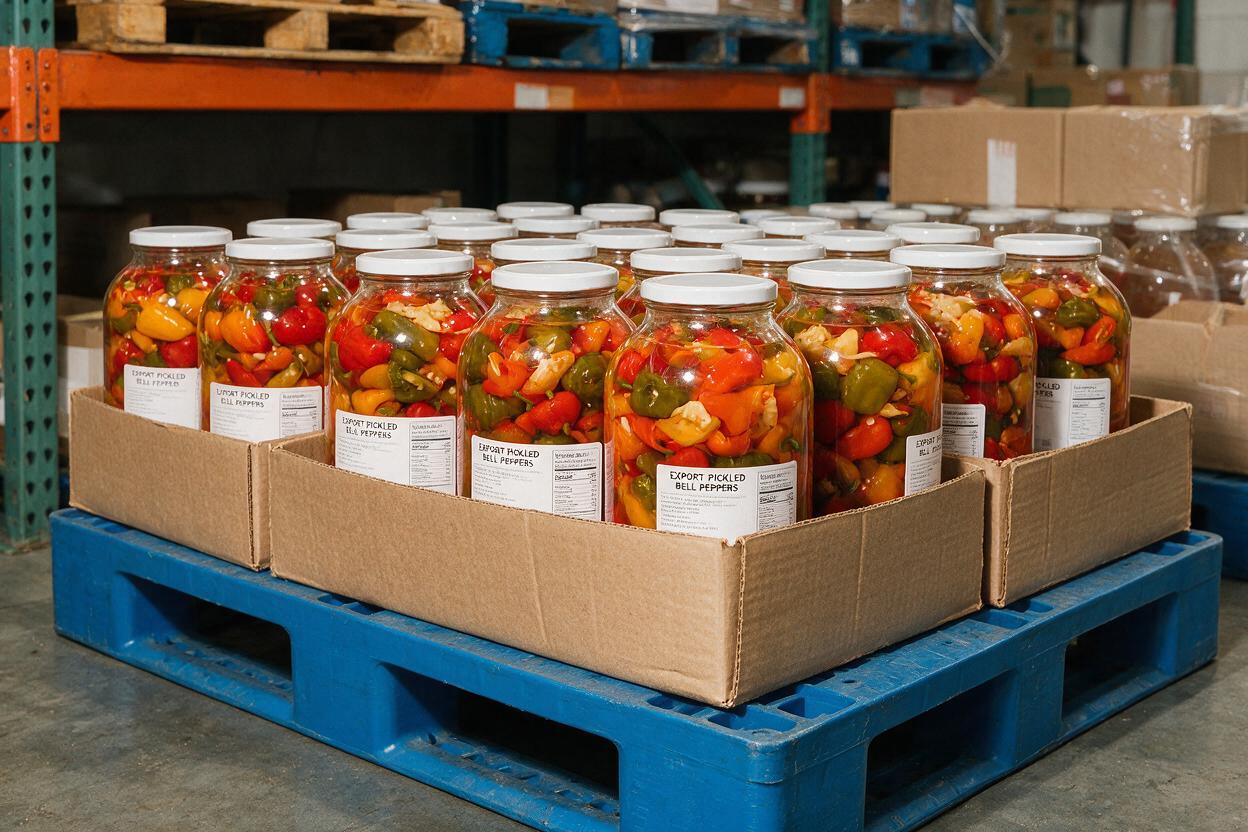
Export jars are packed in shipper cartons with corrugated dividers that stop glass-to-glass contact. The labeling follows destination-market rules: ingredient lists, net weight, best-before dates, and nutrition panels are printed in the language of the target country. Many Chinese suppliers also offer private-label runs, printing a buyer's own brand and artwork onto the jars before filling. Minimum order quantities are usually modest enough for mid-size distributors to test a market.
For an importer, pickled bell peppers from China are an attractive line because they bridge two demand streams: a retail shelf product for condiment aisles and a foodservice ingredient for pizzas, salads, and charcuterie boards. Working with a processor that controls the whole chain, from field to glass line, makes it possible to lock specifications, confirm pH and seal testing, and receive a product that arrives consistent across every container. The category rewards buyers who order on a regular schedule rather than spot cargo, because suppliers reserve production slots around harvest.
Choosing the right partner is the key to success. Experienced Chinese exporters provide full documentation, from phytosanitary records to lab reports on pH, salt, and acidity, and can adapt the recipe to regional palates. Whether a buyer needs a private-label retail line or a bulk ingredient for further processing, a committed processor turns a commodity pepper into a differentiated, margin-friendly product.